I’m Forrest, a yoga instructor and market research analyst living in Northeast Mississippi. I started this blog in order to make a space to share some of the practices that are most important to my life. I have placed my yoga practice, and the sharing of yoga with others, at the front of my life, because it is the primary and most effective tool I use to maintain my health–physical, mental, and emotional. I hope to share helpful information and resources about personal health and wellness, and ways that I build sustainable nurture and care into my own daily life. I hope you find something here that nourishes you!
This entry includes a rough transcription of comments I gave at the Oxford, Mississippi Women’s March on October 2, 2021. The event itself was a success, but I was bitter about having to get there in the first place, having to drag up the emotional strength to get mad AGAIN about right wing extremists getting their agendas through state legislatures. This year, it was Texas, and beyond.
In October of 2011, I was standing on a different part of the same public square, speaking into a microphone against a statewide ballot initiative that aimed to destroy reproductive rights by constructing “legal personhood” at the point of human XY DNA merging and cellular reproduction. This would have denied abortion access to any woman, regardless of the risk to her own life, and it would have rendered multiple, commonly used forms of birth control unlawful to prescribe. Employer control over birth control choice and criminalization of all manner of prenatal and birth outcomes were and continue to be in the landscape of discussion.
It was through my activism that time that I first got to the heart of what these extremist right wing and religious efforts are truly about–that, even if that cellular being is a “person,” it is relying on the body of a Person to survive. And the Person with the self-sufficient body was a Person first. The dependent cellular “person” is no different from a dependent adult Person. The question is not about whether that adult Person NEEDS my blood or my organs to survive–the question is whether they are entitled to take those things from my body against my will. We GIVE blood. We DONATE organs. Even after death. There is no room for the “Person” status of the self-sufficient body to be destroyed merely because a cellular “person” requires those functions. We literally will not even create enough money to support fully-embodied Persons in this country, but people with female reproductive organs can be conscripted into providing reproductive resources?
I have spent a decade in one-on-one conversations explaining the most simple, basic aspects of human reproduction and how birth control works, to men who had never heard of some of this before I said it at a public meeting or on the internet. For years, I looked to patience, reputable links, clear and concise points, oscillating between refusing to get caught up in men’s emotional displays over their own politics, vs. being perceived as an asshole by speaking my mind about how over this conversation I was and am. I lost multiple male acquaintances from social media in this way, due to their devolving into unhinged, abusive rants. I knew these behaviors were bigger than my interactions and a bigger problem by the time Gamergate came around, but all people are Cassandras when it comes to calling out dangerous male behavior. As a society, we just don’t believe that the pile of women’s and children’s bodies are human enough to inspire us to actually deal with the threat.
At the 2021 event, I told a student journalist that I have lost my patience explaining simple shit to people. In 2011, we were trying to “save birth control,” so we were avoiding naming abortion or “going too far” into such a “controversial” subject. In 2021, my rally sign said “Abortion Is Health Care” because I’m SO OVER mincing words, apologizing, qualifying what I say, shrinking, and second-guessing self-torture. In the 45 Administration/Q era, in Mississippi, this has been great for my mental and emotional health. At the microphone, the first thing I said after “Good morning” was “Welcome to the world’s longest war.”
Sources and attributions for the information and themes I drew from are included here. “The World’s Longest War” refers to a piece by Rebecca Solnit. If we really believed gendered violence was real violence, we would include family annihilators in our “mass” murder statistics, and first responders would screen for brain injuries when domestic violence victims report strangulation. I think back to my 20’s, and the friends of mine who had patio plants and furniture destroyed by enraged, drunk exes they had locked out of their houses. But they didn’t call the police. Myself at 22 years old in an office, “managing” an all-female, minimum wage staff–where two different employees, on separate occasions, came straight to work after being physically attacked by current or former intimate partners. They both tearfully told me what happened to them but did not report it to police. I used to worry one of my employees’ exes would shoot up the parking lot after work one day, or follow them into the building in a rage. Upper management included a powerful and wealthy white woman who clearly hated her underlings. She had no fucks to give about who might be shot at the office, or who had been strangled and dragged through a car window at lunch.
If women are gonna get real about what we are dealing with when we say “patriarchy,” we have to understand all of these numbers and anecdotes as a real war against ownership of our own bodies and ownership over our reproductive capacity.
You could start earlier in history, but for my comments, I started with the witch panics of Medieval Europe, primarily because they are one example that I know was a cultural panic of a type that we are still susceptible to.
“Welcome to the world’s longest war–the war over whether or not women own themselves.
In this world and in this war, women who show too much self-possession are punished and killed. At one time, throughout Europe and early America, 40,000-50,000 people, 75-80% of whom were women, were murdered for alleged witchcraft. Some scholars refer to this as a “gendercide” that occurred over about 400 years. Many of these murdered women were midwives and practiced folk medicine. But many were simply on the margins of society. Maybe she inherited land without a husband or a male heir. Independence and power got many women tortured and murdered, through official channels.
[NOTE: Though the vast majority of accused witches were killed through the legitimate or at least dominant authority’s processes, I choose to refer to their deaths as “murders” rather than “executions”.]
In medicine, male doctors spread fear and propaganda about midwives in order to control who had access to women’s bodies during pregnancy and childbirth, resulting in more women and infants dying. (This refers to the pre-germ-theory era when physicians didn’t understand why maternal and infant mortality were higher in hospitals than at home, and in physician care rather than midwife care.) Poor and uneducated women in Puerto Rico were the subjects of the first birth control pill trials, without informed consent, and with high rates of severe side effects.
In the Southern U.S., after 400 years of literal ownership over Black women’s bodies, rape, family separation, and forced labor in medically unsafe conditions, Black women’s reproductive subjugation continued in the form of forced sterilization. A “Mississippi appendectomy” is what Fannie Lou Hamer called this.
[NOTE: A previous speaker also discussed the forced sterilization of Indigenous women by the U.S. government. They also discussed the importance of access to abortion care to trans men, and the denial of agency the medical system often engages in when making medical and surgical decisions for intersex patients during infancy and onward.]
“The issue of self-ownership and self-determination is apparent in heterosexual relationships. Historically and in the present, male partners use a variety of abusive tactics, from intimidation and coercion to assault and fraud in order to control their access to a partner’s body or reproductive capacity. In the most severe cases, they take total control over the woman’s body, and often also her children’s bodies, in an act of murder.
Murder is the leading cause of death of pregnant women.
Of all women murdered in the U.S., about 1/3 were killed by an intimate partner.
Women experience about 4.8 million intimate partner related physical assaults and rapes every year. Less than 20% seek medical treatment.
[NOTE: Above statistics are from the NOW website.]
“First responders and emergency departments have long failed to recognize symptoms of brain injury in victims of strangulation. The number of domestic violence victims with undiagnosed traumatic brain injuries is thought to eclipse the numbers caused by contact sports.
At the time these comments were given, the cause of Gabby Petito’s death had not yet been released. I was fearful for her from the moment she was reported missing. I wondered if the officers who separated them overnight had considered that she would not be safe staying in the van–that maybe she needed a door with a deadbolt, and triple-pane windows. I wondered how normal it really is for officers in that part of the country to respond at all to a domestic violence call, and how often they have left women alone in the middle of nowhere with an enraged man who wants to destroy her just out in the world.
[NOTE: The following stories are not intended to be representative or comprehensive of domestic violence murder and attempted murder in my area. These are just the ones that I remember seeing in the news at the times they happened.]
“Locally, in 2016, Pamela Williams was killed while at work as a mail carrier in Panola County, by her abusive ex-husband.
In 2019, Tabitha Webb had filed for divorce and requested an order of protection when her husband shot her and then himself in the parking lot of the Sardis (correction: Batesville) Police Department, where she fled to when she saw him following her while driving. She survived, in critical condition.
In 2019, Shahara Coggins ran inside a gas station, yelling “He’s gonna kill me,” before her boyfriend shot and killed her. An on duty officer who was present then shot and killed her boyfriend. (I originally stated that Shahara worked at the gas station and was pregnant at the time–however, those details are about a witness, and my notes failed to communicate that to me while I was speaking.)
Within Oxford, Dominique Clayton‘s police officer boyfriend and affair partner (he was married) snuck into her home, shot and killed her while she slept, and left her body for her eight-year-old son to find.
Recently, the murderer of Ally Kostial pleaded guilty to his crime. They were both University of Mississippi students. He was her on-again/off-again boyfriend, and she found out she was pregnant. She wanted to meet with him to talk. He put her off long enough for him to drive to Texas to get his father’s pistol, and then he shot and killed her in a state park picnic area.
Whether or not individuals own the capacities of our own bodies is what is at stake in this war. And that brings us to Dr. Alan Braid, the Texas physician who performed an abortion outside the new restrictive law. If you have not read his opinion piece about WHY he made that choice, I strongly recommend you do so. In his practice of abortion care over the years, he witnessed women’s lives. He witnessed the devastating outcomes of illegal abortions. He believed women’s own experiences, and characterizations of their own needs. By violating this law, he fundamentally affirmed women’s self-ownership, and I want to raise him up for doing that, and let us make sure that our hearts are with him in this legal fight. [Invitation to applause]
At the sign-making party yesterday, a song came on that I have been thinking about ever since. It said “We who believe in Freedom cannot rest until it comes.” And I think about it as I look back on this advocacy that began over a decade ago for me. If showing up to events like this is new for you–welcome to the fight. Some of us have BEEN here, and we plan to still be here.
At this point, I want to offer a small practice, for each person here to connect to the self-ownership that is already part of you. There’s a lot we CAN’T do to effect the landscape of the war around us, but this war is also something we absorb from culture. We are full of a lack of self-ownership in ways we can’t even see. The liberation to own ourselves, in body and beyond, begins by deconstructing our own internal beliefs that our bodies belong to something or someone else. So you can place either hand on your heart and the other hand on top, and first just allow this contact to be present in your body and in your hands. Take a good, big breath. You can begin to repeat either silently or aloud, “My Own. My Home. My Own. My Home.” You can tap your hands against your heart as you say each word. “My Own. My Home. My Own. My Home.” Hold yourself within your own strength, and self possession.”
This exercise felt really good to do, and it seemed to resonate with the group. You’ll never get as big a crowd in the rain, so I was impressed at the turnout. It included a number of familiar faces, and some highly effective new ones, namely the Students Against Social Injustices group on campus. The former theater/choir girl in me wants to say that they need a little bit of mic and projection training, but they are on top of absolutely everything else in their advocacy.
Other speakers included light heart opening and Lion’s breath with Southern Star’s Stevi, who always makes me proud to be her student; an abortion doula, a personal abortion story from a friend of mine whose story I had not yet heard, and a great song by our local soul singer and activist maven, Effie Burt.
It’s simultaneously so draining and so affirming to participate in moments like this. And it’s so important. Not everyone can make it to every. one. of the things we think are important, that we try to show up for. For me, every public demonstration I have showed up for in the past couple of years–other women’s marches and BLM protests, meeting with a rep from an elected representative’s office to object to the 45 family separation (of course she is a total loyalist and was not worth the time to speak to), has been about me supporting all people’s Self Ownership, the Self Possession necessary for all of our liberation.
“So, first follow the truth, and then the truth will follow you.” –Yoga Sutras of Patanjali, Commentary by Sri Swami Satchidananda, 2.36
If you have taken any of my yoga classes, you have probably heard me say that yoga is more than the physical practice, and you’ve done some simple mindfulness exercises. You might have heard me talk about vairagya—non-attachment. Hopefully you felt encouraged to make effort for its own sake, without clinging to the thought of that ideal outcome. Vairagya is one of many fundamental concepts in yoga that originated in ancient texts like The Yoga Sutras of Patanjali. My goal is always to connect my yoga practice and teaching to its roots.
With that goal in mind, this entry is inspired by the Yoga Sutras. The Portion on Practice introduces all eight “limbs” of yoga, of which the physical practice (asana) is only one. Listed before asana are the yamas—moral restraints, and niyamas—moral observances. Truthfulness, or satya, is one of the yamas. Swadyaya, or self-study, is one of the niyamas. My experience has often found these two concepts close together. Swadyaya means study of a spiritual nature—spiritual texts, for example. It is important to recall that yoga is “the journey of the self, by the self, through the self.” Therefore, the study of spiritual texts should be an inward study of what the reader sees or takes from the texts, aka “self-study”. To be able to observe our self in this way requires self-awareness, but more importantly, self-honesty. As I decided what this blog entry about alcohol abstinence should be–what to include and what not to include–I feel the pull to make my drinking habits sound or seem a particular way. The thought in the back of my head says there is nothing unusual in the quantity or frequency of my drinking, so why look too hard? The presence of this thought indicates to me that it’s actually extra important to engage this process and the words I create around it with a commitment to satya.
It normally takes a human body about five days to get past all the aftereffects of even one day of drinking alcohol, and now I’m just past the halfway point. I know that my body is done eliminating any alcohol byproducts, and that the thoughts and feelings I am having are not directly due to the influence of those chemicals or processes.
Before I started abstaining from alcohol this month, I was consistently having several (2-6 with high variability) beers 3-4 nights per week—more than recommended, less than the amount it takes to give me a hangover. As in a typical swimming pool season, I also had several binges over the course of the summer, the kind that create slow mornings and an entire day’s worth of junk food. My habit is definitely enough to have persistent effects on mood, including anxiety and depression, which can turn into a self-reinforcing cycle and which eventually becomes alcohol addiction in many people. I’m glad to be giving myself this gift of increased awareness this month, these opportunities to notice my impulses to use alcohol, and to observe any physical, mental, and emotional changes.
States of Being
I have seen dramatic changes in my income and employment since March. The search for decent work is discouraging. I live in a college town, and our transmission rates are going up and up no matter how many people I don’t hug—which I miss to extremes. Building a portfolio in freelance writing means getting paid garbage for excellent and careful work. I have significant and shifting community service commitments that I constantly feel like I’m not quite living up to, and I internally insist on comparing my responsibilities to my friends who have jobs AND kids in these uncertain circumstances. (This is the part where I dismiss the legitimacy of my own feelings of stress and belittle any work I do accomplish.)
Suffice it to say, I know I’m not the only person who has been following substance impulses more regularly. The amazing thing about my years of mindfulness practice is that I have practiced satya enough to be genuinely more honest with myself, which means I can actively notice this behavior. And if I can notice it, I can decide whether it aligns with what I understand as my highest good. And if it doesn’t, I can choose to make a change. The truth is, it’s all me.
I want to remember that when I feel a lot of responsibility, alcohol seems to expand my capacity to “just keep swimming” and not get stuck or talk myself out of my tasks. Is that false bravado I create, or does using alcohol actually dull the edge of my toxic perfectionism? The truth is, this is difficult for me to discern. I think my task right now is to witness that negative perfectionism in all its deadly glory and perhaps strategize different ways through it. I know that suppressing and avoiding my internal states is as damaging in the long run as alcohol is damaging to the body. I have a book that refers to meditation as hygiene for the mind. Maybe I need to commit more time to tidying up. This is exactly what some yoga-isms say—that if you “don’t have” ten minutes to meditate, that means you need an hour. I meditate, but maybe I need to build in some extra.
Impulses
My “Have a drink to wind down,” impulse is significantly lower than it was. For me, it only takes a day or so for that thought to fade into a type of background that I easily move beyond. I feel relieved at that. It feels like I can be assured that I don’t have physical dependence on alcohol. I have never had to take a drink in the morning to stop my hands from shaking or to get going, but I think physical dependence is much more subtle than that for a long time. The mind will tell us a lot of things to get us to behave in a way we have taught it to depend on. And that includes creating intense “want” for a drink and rationalizing of behavior long before it creates a physical “need”.
Thinking back to last Sober September, this socially distanced version is neither harder nor easier. Last year, I ran a gauntlet of social outings while sober—a birthday dinner, a brunch, a concert—and it wasn’t a problem. This year, there are a handful of back porches I visit, and like last year, it doesn’t bother me to be around other people who are drinking. I also don’t feel like I want to drink to stave off loneliness or boredom. I like having this knowledge, a lot. It means I have the space to do whatever I would be doing, and that I don’t choose to drink just because everyone else is. It means my friendships are built around true enjoyment of the people I want to spend time with, not mutually convenient proximity to a substance we like.
I feel the alcohol-sugar connection very acutely. I REALLY WANT sweet drinks like sodas, desserts, more honey with my breakfast—there are brownies baking in my oven as I type this sentence. Because my goal is Sober September, not Sugarfree September, I am indulging in an extent of sweets that I normally don’t. (Sidenote: I wonder if simultaneously quitting alcohol and sugar cold turkey isn’t a major diet saboteur for people with weight loss goals.) My usual 12 oz. light beer has 95 calories, which means I had been enjoying about 1600 calories per week in beer alone. That is almost an entire day’s worth of calories, y’all. Meanwhile, one brownie has between 130-200 calories depending on serving size, and a soda has about 140 calories. I’m able to satisfy my sweet tooth with only one treat rather than several beers, so I’m reducing those extra calories to about 25% of their Peak Beer total. One of my goals going forward will be to maintain awareness of those alcohol calories and remind myself that it really is extra sugar. It’s not good for my health for that reason alone.
What’s Different
I’ll start with the one that stands out to most people who try alcohol abstinence—deeper sleep. Alcohol does depress the central nervous system, which makes falling asleep feel like it’s going to be deep sleep. But its diuretic properties make me more likely to wake up to pee, and can cause that to happen more than once. The other thing that will wake me up is the point when my body converts all that alcohol into energizing glucose. The “sugar high” part of alcohol is slower to set in, but just as pronounced as if I ate four brownies instead of drinking four beers. So some nights of moderate drinking and a reasonable bedtime, I would get up to pee and then stare at the ceiling for an hour or two.
Alcohol has been shown to decrease the number of REM cycles the brain completes in a given night, which means less restorative sleep even if you are not conscious. You (I) physically and mentally recuperate from life less if you drink routinely. We know a lot now about the profound damage sleep deprivation can cause, so I want to commit to understanding my sleep as precious time whose quality I want to protect. Yoga and meditation go a long way, but so do my choices of what to put into my body.
I notice that my coffee works better in the morning. This might be entirely due to being better hydrated—another benefit of reducing alcohol—or it might be that my brain is more prepared to be alert because I am fully rested. Either way, the caffeine feels like a nice perk I give myself for getting halfway through the morning instead of a necessity to make my thoughts come together.
I feel more aware of my core when I work out. This could again come down to hydration, but it could also be neural pathways functioning better because my digestive organs aren’t so busy processing alcohol and its byproducts. My waist and belly feel smaller, which I think is bound to be related to the lower net sugar intake. I feel like I am able to do core and ab exercises more effectively, and that they are paying off more. Is this because my body is better at muscle repair with the better sleep? Is this just a self-serving perception I created because I want there to be vanity benefits of giving up alcohol? I’m not sure. Self-study often reveals the places where I lack understanding of my own behaviors or motivations, and that’s why it’s important.
What I Want To Keep
I want to keep it casual with alcohol. I want to work hard in my garden, on my horse, at my computer, and on my yoga mat. And sometimes I want to crack open a cold beer when I’m done, but I don’t want my anticipation to feel pronounced. I want to raise a glass because of joy and deliciousness, with nothing to hide, to not become attached to the thought of when I can have the next one.
Last year, I didn’t set future goals about my drinking. This year, I think it’s very important to spend time considering what I think is ideal in quantity and frequency. It’s important to sit with the truth of my awareness, even if what I see there is uncomfortable.
My meditation practice was really strong in March when I came home from Advanced Yoga Teacher Training in Guatemala. I felt afraid of the uncertainty, but powerful and fearless. I spent a lot of time listening to songs about Light. I thought y’all might like this one, which is really about the truth.
This question is living inside every present moment with me lately, a core level begging for certainty and trust in the future. I work daily to cope with the fear and despair I often feel, and I work daily to act in spite of a lot of hopeless feelings. It takes me some inner work to engage job-searching in good faith, in an economy with incredible high unemployment and a lot of damage left to go. It takes some inner work to engage in often frustrating community work and advocacy that could help materially support people’s security. It takes some inner work to convince myself of the value of the yoga I offer, when the disposable income to pay for yoga simply doesn’t exist in so many households, even households who haven’t suffered job losses.
But this is a yoga blog, and I truly do believe there is a yoga practice to support absolutely every person in every time. Acknowledging that I feel insane for trying to sell anything right now, I would love to be teaching more private yoga classes. There is a loss in quality in not being able to teach in person, so these prices are lower to reflect those limitations as well as the fact that I don’t have to include the cost of a space in the price. I have used Zoom, FaceTime, and Google Hangouts for private classes. If you or someone you know would like a class or a package, message me @SassafrasYogaMeditation on facebook, or comment here.
Here’s what I’m doing:
Weekly Wednesday Community Yoga: Feel free to try out my themes and formats on Facebook Live every Wednesday evening at 6 pm Central. Last week’s class, linked below, was well-received. All the previous weeks’ videos are still up.
Classic Yoga Classes: I can teach to a variety of different needs and skill levels in a one-hour class. Classes can focus on the student’s physical needs and ability, they can center on the student’s personal mindfulness practice, they can explore traditional yogic myths and historical texts, and they can explore concepts like the major Chakra system. Each class typically includes 45-50 minutes of alignment-focused movement, and 10-15 minutes of meditation. The time proportions can be adjusted according to need and preference.
Single Classic Yoga Class–$45.00
Set of 5 Classic Yoga Classes–$200.00
Deluxe Contemplative Classes: These are only sold in 5-class sets, and include short readings or thought exercises outside of class. The class will begin with a 30-minute Dharma Talk about the reading or the exercise, and an asana, pranayama, and meditation practice tailored to the topic and the student. This practice can include yoga nidra, mantra, or seated meditation. These classes are a great way to explore the yoga sutras and the Chakra system.
Set of 5 Deluxe Contemplative Classes–$325.00
Yoga For Justice: I started this weekly yoga practice on my YouTube channel after Minneapolis police murdered George Floyd and it took days of major demonstrations all over the country for them to even be arrested. I’m continuing them because Breonna Taylor’s murderers remain free, because policy makers continue to act ignorant about addressing these problems at the policy level, and because recently my county’s Board of Supervisors voted not to remove the Confederate soldier statue that sits in the sidewalk going to the court house, physically within the pathway to justice. I don’t think these classes are as good or as effective as they will eventually become. But yoga and mindfulness are not meant to build up our avoidance of difficult topics, feelings, and discussions. They should open us to engage the difficult things so that we can grow and move forward. These are not necessarily “feel better” classes, but they hopefully are “feel clearer” or at least “learn something” classes.
Pandemic, self-quarantine, unrelenting existential dread. How could 2020 possibly be a joyful year, at this point? I could tell myself all the stories about why now is not the time to write about joy, put this aside. Or I can write what I know, beginning with the fact that Joy is whole and complex just like everything else.
I think that Joy is most profoundly felt in people who have learned non-attachment. Non-attachment, vairagya in yoga, means participating in life and making efforts for their own sake, with no expectation of any certain outcome. This is hard for us. We don’t want to “waste” our efforts, we want to control the quality of our outcome by purifying the quality of our efforts. We think if we go to yoga in the perfect frame of mind, with the perfect intention, then we will do every pose perfectly, and feel perfect later. Then when we find ourselves imperfect to begin with, we don’t go in to the class because our “head is not in the right place.” But that’s not how effort and purifying work. Sometimes, even with serious consequences at stake, our most valiant effort is followed by devastating failure. Sometimes we’re physically caring for someone we love with a terminal illness, knowing they will die and we can’t stop it. Or maybe all our plans and income fall apart because of a global disaster.
Personally, I finished a bar exam two weeks before my father took his life. I was VERY attached to how good it would feel to tell him that I passed, because I built a lot of toxic perfectionism around the frame of pleasing him in a particular “first child achiever” type of way. My feelings when I did find out I passed, were pretty fucking complex. I did a lot of letting go that year, whether I recognized it at the time or not. When we scattered his ashes at Cape Flattery in Washington, there were warm and Joyful family moments that only we shared and I will never forget. What I know now is, to be able to make my biggest, realest effort, purely for its own sake, requires a LOT of self love. It also requires the “awareness in the present” that mindfulness practices cultivate.
My 2020 had some hard moments around the time we should have been advised about the COVID-19 emergence. Unrelated to the earliest signs of the global pandemic, my friend died after a two-year battle with ALS. ALS is a heartbreaking thing to learn about when you learn that someone has it. She was my friend through her son, a dear person to me, who I never felt I could help or comfort as each new day, week, month brought new stresses and pains. He was able to do his job remotely, so he and his sister both moved back to Mississippi to be able to spend time with their mother and take care of her. In 2018, when she could still walk, and could speak, he invited our small group of Soul Friends to spend the weekend with her. We all got to be together, which we hadn’t managed in many years of jobs and marriages and kids and moves. We got to have deep and truthful conversations about what we have meant to each other over this time, and we got all the hugs and back rubs and dog love. We cooked together, and worked on nutritious, soft foods she could swallow. Her birthday is three days after mine, and I made a lemon Charlotte Russe and a winter vegetable risotto that she really liked. I cried as soon as I smelled the inside of her house, and I wanted to cling to every second, to her, to my people. We all took a long walk by her creek with her and the dogs, and held onto a big group hug before we left. I cried for the first half hour of the ride home when we had to leave.
In January of this year, we returned to that family home, for the first time without her. She had demanded a Celebration of Life as a service. In the cold and sun, we set up all the spaces to host visitors, and painted and crafted, cried and chatted. At night by the fire pit, we worked on the music for the service, and had epic dance parties with all our songs from back when. Personally, I think exuberant dancing should be prescribed during hard times. I think it calls Joy up into the body and mind. During the Grief Dance Parties, we dropped to the ground to pump out pushups, screamed out all our power songs, stomped, opened and moved our hips, cried, hugged, had rapid-fire conversations about any and everything. We BREATHED. Hard. I learned a lot about my friend from conversations with others who knew her, and I got to know people in her family who I had never spent most-of-three-days with before. Every person was in pain, noticing her absence, seeing her tiny dog and constant companion continue to look for her, wondering and worrying about the immediate family. But our collective presence and attention was vital, healing, and Joyful.
All of that openness sent me on a hard wave of passing back through my grief at my father’s death, which I knew it would. But it did it in an unexpected way this time. We sang Joan Baez’s “Let Your Love Flow,” at the celebration, which I put on when I got home. Her version of “The Water Is Wide” was our family song when “our family” meant both of my biological parents and my sister. We each had a verse, and harmonies. Dad played guitar beautifully. I probably haven’t listened to that song since my Dad’s service, or shortly after. It hurts so much. So in the early winter, as I felt that hurt, and breathed, and stayed open to it, I realized that although my Mom is alive and thriving, and I get to hear her sing and sing with her somewhat regularly, I haven’t heard her voice on that verse since the last time we all sang “The Water Is Wide” together. I’m not sure when that would have been, exactly. But one time, I heard the sound of our voices together for the last time. Would we have put our efforts into that sound in a different way, if we had known? Would we have been less open, the sound less intimate, if we had thought to protect ourselves from the grief we have all now been through?
Joy, as I think of it now, does not mean “euphoria” or “ecstasy,” which to me imply de-connecting or detaching. Those may appear alongside Joy in some moments, but they are different from it. Joy tends to appear in clarity, and it often accompanies pain. Ursula K. LeGuin describes Joy as “gladness without reason” in The Left Hand of Darkness. In the novel, the two main characters are on a difficult and depriving journey. They have only day in and day out of maximum effort with not enough provisions. The novel’s main focus during this time is the characters’ development of a close friendship and deep affinity for each other. Their relationship is described as particularly special, containing a shared experience of Joy that cannot be replicated after they accomplish their mission and get back to civilization.
In music, Joanna Newsom’s extraordinary “Time, As A Symptom” is full of lyrical gems, one of which describes “the nullifying, defeating, negating, repeating Joy of life.” I find truth in these sentiments, that real, genuine Joy often comes at the cost of great effort and loss. That the basic experience of Joy does not depend on comfortable or “happy” circumstances. Joy is connection without attachment. Euphoria and elation imply a dizzying lift away from connection that is gone as soon as the immediate feeling is disrupted. Euphoria and elation and ecstasy are delicate. Joy is powerful. Newsom’s song also says
The moment of your greatest joy sustains Not axe nor hammer, tumor, tremor Can ever take it away, and it remains It remains
Joy is indestructible. Memories of joyful experiences can be some of the most vivid. Joy can feel like profound self connection, or mutual connection. It is a type of intimacy. It requires openness to one’s Self, and to others’ Selves, and humans love these feelings. Joy hangs around the corner from grief and pain because we need it to survive life’s inevitable griefs and pains. Joy shows up to lift us and remind us of Love. What I know now is that the end of a single experience of Joy is not its destruction. It remains, accessible in the clearest and surest parts of my memory, and probably around the corner from the next disaster.
Because I want to leave this with something strong that you can dance to, and I hope you will.
Writing this entry begins with acknowledging my own hesitancy to write or say anything too honest. See, we are living in a “worst fears” kind of scenario for me. When I left my former job, I knew there were financial risks associated with leaving a predictable salary with (shitty) insurance and paid leave. There is a widespread non-acknowledgement of the risks of staying in (under-supported, underpaid, no-path-forward) salaried jobs past the point one’s personal health can support it. It seems widely understood that splitting time between part-time and self-employed work is more precarious. There is a widespread non-acknowledgement that the expansion of the part-time and self-employed segment of the economy (the alleged “recovery” from the 2008 financial collapse I graduated law school into) was a dangerous expansion of precarity in the overall economy. It reflects more hesitant business investment in payrolls, which is BAD for working people. But “unemployment was at record lows.” (DEAR GOD DO I ROLL MY EYES AT THIS.) During the time I came to the decision to teach yoga and figure out make ends meet, I fretted over the possibilities of my own injury or illness bringing everything down that I was working for. And I worried that, having barely treaded water through one major recession, I might weather a “next time” even more poorly. So here we are with world economies in a freefall, and I am worried that I shouldn’t say those parts out loud, because people come to yoga to feel better. And who’s gonna buy my yoga if I am a huge downer? (Oh hey, depression thoughts–still here, I see.)
What I think I am experiencing is some emotional avoidance and denial, in the form of feeling pressure to choose a “more marketable” perspective to share. And so I have to look hard, here, and decide whether I am offering yoga and mindfulness, or the “more marketable” inspiration-sounding fluff that dominates the health and wellness industry. Don’t get me wrong, I want everyone leaving a yoga class with a fresh perspective, maybe even inspiration, and feeling better. I just know from my own use of these practices that I don’t have to get high on empty affirmations or “forget about my problems” for yoga and meditation to make positive changes. Mindfulness practices aren’t intoxicants, and they don’t remove us from perceiving our harsh experiences. To the contrary, in my practice, bringing full presence of mind into my frequently harsh inner experiences helps me to overcome outward inertia, helps me be proactive, helps me forgive myself for a depressed day spent almost totally still on the couch, and helps me keep an open mind for new opportunities. Maybe everything will fall apart, even with my best efforts. And if it does, I must hope that I have built enough strength around my belief in my fundamental Worth and Worthiness as a being, to withstand the future.
This week in yoga, I offered exploration of a couple of different sequences with the suggestion to intentionally move the gaze through a movement. Where we place our physical sight affects our posture and balance, whether or not we are paying attention to where we are looking. Keeping the gaze on the floor out ahead of the body makes balancing on one foot easier. Looking up higher requires more effort to maintain the balance. Gazing up at the top palm in Peaceful Warrior or Extended Side angle can make those poses more challenging to maintain, maybe also bring awareness to new spaces in the shoulder and chest. Within a few simple physical movements is a powerful experience of being in charge of our own attention. In the mind, this means examining all the things that come into our awareness, without judgment or assessment. What am I witnessing in myself in this moment? How am I interacting with the world and with others? Can I see somewhere in my life that I have been thoughtless and reactive? Can I see what “shoulds” and “shouldn’ts” I have unconsciously imposed on myself? We each have a role as a witness to our own experience, and to the world around us. A witness capable of communicating truth is someone whose view is not obstructed, who understands the limitations on his or her own perspective, who observes and speaks from a place of remove. The Witness is not a Judge. The Witness doesn’t delve into the Why. So as The Witness who seeks to share truth, what is passing through my attention? Where can I choose to aim my attention to serve my highest good?
In the world, I witness people who have little or no control over the constant new demands on their efforts. Teachers are learning how to get half a semester’s worth of class content onto online platforms, and participating in discussions about how to do grades this year. Parents are learning and connecting to ten different online tools to support their kids’ education during school closures. Those “lucky” enough to still have identical and consistent income are making a change to remote work with ever-shifting expectations, and learning to share 24/7 space with partners and kids. Those who have lost jobs due to the closures–especially those fully or partly self-employed–are struggling to understand where they fit within their state’s unemployment benefits structure, and whether it will even help. Or help in time. Some people are relishing full solitude, while others find it very unsettling. Some people seem to avoid all credible information about the risks associated with uncontrolled spread of COVID-19. Some people compulsively refresh page after page of charts and numbers and rates and share upbeat captions of pictures of themselves in masks. Most everyone is learning how much they rely on food and toilet paper outside their own house, and how many trips to the grocery store they really make in a week. We are helpless to support front line health care workers whose pay and job dignity are toilet paper on the ass of their corporate overlords. In myself, I witness a feeling of desperation for those who deliver health services to be supported, the terms of their jobs created with their human dignity in mind. All of this is a LOT of new engagement of our attention, and a LOT of stress. It is exhausting. I honestly hope everyone adds an hour of sleep to every day. And I hope everyone is finding space outside the Cult of Productivity to give themselves kind attention. It matters.
Everything that’s certain (Shelter In Place orders) is unfamiliar, and very, very few things about our futures seem certain anymore. Not that the future WAS certain before this pandemic, but at least the way I lived, the day-to-day grind made it feel like there was certainty about the future. I have not seen a yoga student in 3D in a month. A month ago, I would have scoffed at the idea that we would not be back in class by now. In myself, I witness my stress at sorting out my work life, shame at having human needs I struggle to meet, guilt over the resources and security I am privileged to have, hope and pride when I send out applications and cover letters for freelance work, frustration at what I lack in yoga video self-production, joy at the amount of baking I get to do, and relief that I’m not daily packing up 12+ hours of my life to drive all over multiple counties for too little money. What I notice, in addition to the very obvious anxiety and depression, is dissonance.
Dissonance, this simultaneous experience of seemingly conflicting feelings, makes a lot of people (It’s me, I’m a lot of people) deeply uncomfortable. I think in the past, I have experienced cognitive and emotional dissonance as unpleasant “noise.” In an environment of physical noise that reaches a certain volume or convolution, my first impulse is to avoid it or try to reduce ALL of it. It’s much the same in the environment of my mental and emotional noise. What I know now is, the only true relief from the tension and stress of mental and emotional noise, is to stay within the experience, listen over time, and sort out the different tones. If I can use my attention to notice and separate my conflicting thoughts and emotions, maybe I then have opportunity to think about where each piece could fit in a more harmonious way. Maybe I’m more likely to notice where I have an opportunity to act in a positive way. Maybe I can see a place where I am wasting energy, or recognize how much rest I need. Maybe I can release anything that was rigid in my view of my future. Maybe I can shrink down the scope of what I think I can control to its true size. Maybe I can acknowledge the burden of coping with all this change and uncertainty. If it all falls apart, it was honestly going to do that anyway. Maybe I can still breathe in a post-fell-apart world.
So much is different now, it’s hard for me to decide whether to try to condense it into a quick sum-up or not mention anything at all. I’ll land in the middle, maybe. This entry assumes that you know that April 8, 2020, occurs in the midst of a pandemic level of a highly infectious, novel virus called SARS-COV-2, which causes a respiratory illness in humans called COVID-19. Anywhere that justice exists, people are working remotely from home with their incomes maintained, moving around as minimally as possible. Justice exists almost nowhere. There are deep currents of stress about an illness that, when severe, drowns people in their body’s own immune response the infection, and everywhere, people whose jobs are refusing to treat their lives and exposure levels with dignity. There are deeper, long-established currents of economic stress in the millions of people who have lost their already-insufficiently paying work, had no paid leave, and are living on the edge of the next month, during which we will probably still need to minimize our contact with other humans, and during which businesses will not be rehiring or ramping up production.
In this context, my only yoga teaching opportunities are online, where I am a non-expert at creating virtual content, and without the funding to invest in better tools like microphones and camera/laptop upgrades. I’m using Zoom right now, but am doing my best to learn what safe options there are in the settings and in the video streaming platform world, given security concerns.
I started a weekly 30-minute community yoga, Wednesdays at 6 pm CDT, and it is truly a joy to see familiar faces of former students, and people new to yoga, on the screen. I’ve done my best to let go of what all is lost from being able to see people in 3D in class, and offer them care and adjustments in that way. It’s a loss I feel every time I teach, so I get this cycle of joy at doing what I love, and a poignant sense of my desire to be with my students in person.
This week, it was a real struggle to come up with a mindfulness exercise. Yoga teachers are just like everybody else, we feel the lows, we struggle to organize our own minds and emotions. Wisdom is giving ourselves a personal practice and a way to offer ourselves clarity. Hopefully we then bring to our classes a practice that is clarifying for the body, and for the mind. I struggled this week with calling my every idea a “downer,” feeling low and lethargic, feeling plodding and clouded on the mat. I feel a type of pressure about “staying positive” or “offering inspiration,” which absolutely do not feel True. Yoga is not about avoiding or looking away from the ugly. I have cleaned and scrubbed and dusted and laundered my home. I have baked cinnamon rolls and puff pastry that delight the senses and nourish the body, and I barely even like them. The clouds still didn’t lift after a 5-mile walk (in the rain, no less) yesterday. My cat will never not be sick again, and I worry for him daily. Oh hey depression symptoms, you WOULD show up now.
As often happens, over the course of allowing myself to Be in whatever state, but still Behave in the best interest of my health and self, I found a little grain of gratitude to cling to. I’ve suggested that my students “appreciate” their breath or offer gratitude for its presence in classes before. It carries us through our lives every day, and it’s a simple thing, but I feel the nature of my gratitude for my breath has changed, or intensified.
In this context of every outing possibly risking a disease that can crush the breath, in this context where we have little, if any, control over fundamental components of our lives, gratitude for the gift of breath is gratitude for one of the only things truly our own. I found myself considering and appreciating the breath’s power and presence in our individual lives. In each person, the breath is our own. To lose the ability to breathe, or to breathe effectively, is crippling. To require medical machines to breathe for us is to hang over the very edge of Alive. Our body practices at breathing, and then the day we are born, our body clears the lungs to make space. Thus begins our lifelong relationship with the elements, air and breath being the most primary. Our breath is with us from that instant of birth, before our conscious awareness develops the cohesion to communicate or create memories. If we lose our memories and cognition during our life, our breath will still be with us. It is with us while we sleep. The action of breath is not given to us, it simply is part of us. No matter what is spinning out in the world around us. A yoga practice offers an opportunity to notice this gift, and to build the parts of the body that support the breath and keep it healthy.
In these days where there is nothing to be done about so many circumstances, where it feels like there may soon be little else, I breathe.
I
love to bake, and I bake a lot of different kinds of things. Some
years, I have made Christmas cookie boxes with a dozen different
shapes, colors, and textures to choose from. I like to make classic
Southern caramel cakes with crunchy-creamy candy frosting. I recently
went on about a two-year custard journey, and can now make everything
from loose custard for trifle, to set bavarois. I have yet to master
the almost-fatless genoise sponge, but I’m working on it.
And because of all my baking has taught me, I have decided that every
person is a cake. We never do finish baking or being decorated, but
inside, we are each a gorgeous, delicious cake that everyone is
overjoyed to have at the table. Maybe you already know what kind of
cake you are—tiered and adorned, frosted or sugared, damp or airy?
Do you feel more like a pie? The point is, you’re a cake (or a pie
or a perfect bread), and hopefully by the end of this blog, you’ll
have some ideas
about how to adjust your special recipe to make sure you bake to your
fullest potential.
In
July 2019, the LaMiss (Louisiana-Mississippi) Affiliate
Chapter of the
Association of Contextual Behavior Science Conference was held at the
University of Mississippi. This conference meets every other year,
and two of the authors from my Resources
post are members. The 2019 conference was created as a tribute to Dr.
Kelly Wilson, retiring as Professor
of Clinical Psychology and all-around outstanding professor and
mentor to a number of talented therapists, counselors, and behavior
scientists. It has been a pleasure over the past more-than-a-decade,
to get to know Kelly and his various students and former students.
While enjoying these humans in my lucky world, I have absorbed and
sought out a lot of information about psychology and behavior
science. These people, beginning with Kelly, are the reasons I
learned what ACT
(Acceptance and Commitment Therapy)
is, how I came to (partly) clicker train my cats, and why I am so
passionate about maintaining the mindfulness and meditative
components of my yoga practice. The conference was local and
affordable, and they asked me to teach a yoga for attendees, so I
also
attended the first day of
presentations.
At
the conference, I sat in one session in which former-student lab
partners who now work in a variety of academic and practical
disciplines discussed their ongoing connections and collaborations
with each other. They feel better supported in their work by
maintaining this particular community and its analytical goals and
values. In another session, the speakers discussed the ways in which
a university “behaves,” including its communications with
students about their academic experiences and requirements, and its
ongoing compliance practices with Title IX. One speaker constructed
the climate crisis and other exploitative and extractive world
conditions as fundamentally human behavior–and therefore
solvable–problems. It’s one of the most heartening things I have
heard in quite some time. Finally, I went to a session of applied
Eastern practices. We did a great Durga chant with some therapists
who use sound and singing in their therapy practices. They began by
offering gratitude to all the people who contributed to our being
there that day–the scientists in their field, including all those
not present (women, people of color, the scientific knowledge of the
African continent that was lost when the Library of Alexandria was
burned), and the indigenous Chickasaw people on whose ground we
stood. It was far from my stereotype of an academic conference, and
absolutely no one appeared to me to be worried about who they needed
to influence or network with. Maybe that had to do with it being a
very loving send-off theme, but the affinities between people were
obvious. This affinity only intensified at the most mutually
enthusiastic and dynamic bar karaoke I have ever seen.
Because
of everyone who ever told me stuff or wrote stuff that I read, or
caused me to go look some of this stuff up, here is my lay person’s
offering of understanding of Contextual Behavior Science. With love,
gratitude, deep breaths, and citations.
II. CBS Is Baking
“Contextual
Behavior Science” is a lot to try to explain or to understand. I
highly recommend exploring the information available at the
Association
for Contextual Behavioral Science website,
linked here in various quotes.
Contextual
behavior science rejects the idea of absolute truth, and does not
assume any point of view as “objective” or as having been created
from a neutral environment. The best way I have come up with to
illustrate the difference between a “contextual” behaviorist and
what I would call an “objectivist” (meaning believes in absolute
truth, not referring to any specific philosophical system) is this
baking analogy in which we are cakes. (If
the baking part seems confusing, watch The Great British Baking Show
over several seasons, for the baking information and demonstrations
of the kind of
adaptability CBS folks call “psychological
flexibility.”)
If
asked to describe how to bake a cake, a pure objectivist might recite
a highly precise recipe, insist on measuring with a kitchen scale,
and might say “This cake will be fully baked in 30 minutes at 350
Fahrenheit.” By contrast, a contextualist recognizes that high
altitudes and other conditions affect all the baking processes. A
contextualist might say, “This cake will be fully baked in 30
minutes at 350 Fahrenheit, except above 3,500 feet above sea level,
in which case several adjustments
to the recipe,
including temperature and baking time, must be made” to create the
exact same cake. Like altitude, humidity affects the amount of flour
required to make dough, and high humidity can make candy recipes
impossible to make. The chemical processes and changes the
ingredients go through to become a cake can be described in empirical
terms, but to correctly induce and control those processes to make
the kind of cake you want, knowledge and adjustment for the
surrounding conditions (the contexts) is required. Bakers have long
been studying contexts and finding
flexibility
in order to create scrumptious, desired outcomes. To a contextual
behavior scientist, perhaps we
are each different kinds of cakes, all trying to bake to our most
stunning and delicious potential. But different cakes are made from
different things, and they need different temperatures and cook times
and pans and volumes, plus our individual altitude and humidity
conditions can vary drastically.
III. Behavior
Analysis and Controlled Contexts
“[B]ehavior
analysts simply believe that people learn how to think, reason, plan,
construct meaning, problem-solve, and more through interactions with
their natural, social, and cultural environments. Thus, behavior
analysts attempt to identify aspects of the manipulable environment
that influence the occurrence, incidence, prevalence, or probability
of both private and overt psychological events.” –Functional
Contextualism, ACBS
The
history of scientific behavior analysis, and
modern behavior analysis, were heavily influenced by
B.F. Skinner, whose experiments with animal behavior created the
concepts of operant conditioning, reinforcement schedules, and other
constructs of behavior and learning. From the B.F.
Skinner Foundation,
“The experimental
analysis of operant behavior has led to a technology often called
behavior modification. It usually consists of changing the
consequences of behavior, removing consequences which have caused
trouble, or arranging new consequences for behavior which has lacked
strength.”
Behavior
analysis is about experimenting with specific analytical goals in
mind. Skinner’s most famous method of behavior experimentation
involved “Skinner boxes,” which were very small, contained
environments in which the stimulus, response, operant, reinforcer,
and reinforcement schedule could all be identifiable and manipulated
in controlled ways. “A
hungry rat is placed in a semi-soundproof box. For several days bits
of food are occasionally delivered into a tray by an automatic
dispenser. The rat soon goes to the tray immediately upon hearing the
sound of the dispenser. A small horizontal section of a lever
protruding from the wall has been resting in its lowest position, but
it is now raised slightly so that when the rat touches it, it moves
downward. In doing so it closes an electric circuit and operates the
food dispenser. Immediately after eating the delivered food the rat
begins to press the lever fairly rapidly. The behavior has been
strengthened or reinforced by a single consequence.” Alsofrom The B.F.
Skinner Foundation
These
experiments are hugely important to our understanding of how behavior
operates and what can be done or changed to influence and shape
behavior. Behavior inside the box is just not the whole story,
because it is the study of behavior in a highly controlled and
limited context. Contextual behavior science is dedicated to bringing
precise, scientific understanding to the many complex contexts in
which behavior occurs “in the wild.” Humans and animals behave in
very different ways in different kinds of “boxes” just like
flour, butter, eggs, and sugar behave differently above 3,500 feet
above sea level, in high humidity, and depending on the ingredient
proportions and
mechanical processes they are subjected to.
A great example of an
experiment on behavioral
differences in the same animals, in different kinds of boxes, is the
Rat
Park
experiment. Rat Park
was all about observing physical addiction in different contexts.
Rats, which are
naturally social, intelligent, and curious,
were isolated in
conditions that had
previously resulted in physical addiction to a
morphine liquid. Once addicted, they were moved into Rat Park, where
they had social access to other rats, and free access to play and
stimulation. They
had free access to food, water, and the morphine liquid. Once they
moved into Rat Park, the addicted rats weaned themselves off of the
morphine liquid, preferring it less and less over time, and
tolerating their withdrawal symptoms in order to participate in their
healthy, social, stimulating environment. This contradicted the
accepted framing of addiction, the belief that “once an addict
always an addict.” An addict in an appropriately supportive
environment may have everything they need to break free from their
substance of choice.
IV. Behavior
Analysis and Private Contexts
As
it says in the basic definition, behavior analysis includes analysis
of both “private and overt” psychological events. Part of the
full picture of behavior, behavior modification, and retention of any
modification, includes the private psychological events within the
individual. This is individuals relating to their own emotional
states, their own perceptions of their relationships and lives, their
own perceptions of their own thoughts and mental states, however well
or badly, however
consciously or
unconsciously they do those things. Most individuals are not the most
reliable narrators of their own private psychological experiences,
but we don’t have the most perfect or precise tools to
“objectively” measure them either. Even in the world of
“physical” experiences, individuals have notoriously
idiosyncratic and varied experiences of physical pain. Still, to
study behavior as it actually occurs “in the wild,” we must have
somewhat systematized ways of analyzing and understanding these
private, internal experiences in others. This is maybe the part where
the mixed cake goes into the oven, for better or worse, and the
protein and sugar structures behave in the way they behave, under the
given conditions.
Carl
Jung worked in an area
of psychology called psychoanalysis. He was not a behavior analyst,
and he never conducted
experiments in boxes or on animal behavior (or in the kitchen, that I
know of), but he explored and articulated important contexts within
the human mind and constructs of the subconscious. He did amazing
work developing an understanding of what “unconscious” means, and
of archetypes as a kind of brain structure through which information
is filtered—consciously and unconsciously—to create meaning in
the world around an individual, for example.
“’Everything
of which I know, but of which I am not at the moment thinking;
everything of which I was once conscious but have now forgotten;
everything perceived by my senses, but not noted by my conscious
mind; everything which, involuntarily and without paying attention to
it, I feel, think, remember, want, and do; all the future things
which are taking shape in me and will sometime come to consciousness;
all this is the content of the unconscious… Besides these we must
include all more or less intentional repressions of painful thought
and feelings. I call the sum of these contents the ‘personal
unconscious’.
“Unlike
Freud, Jung saw repression as
just one element of the unconscious, rather than the whole of it.
Jung also saw the unconscious as the house of potential future
development, the place where as yet undeveloped elements coalesced
into conscious form.”
–Journal
Psyche, quote by Carl Jung
Most
striking to me, for its relationship to contextual behavioral
science, is Jung’s description of the collective unconscious.
“‘[T]he
term archetype is not meant to denote an inherited idea, but rather
an inherited mode of functioning, corresponding to the inborn way in
which the chick emerges from the egg, the bird builds its nest, a
certain kind of wasp stings the motor ganglion of the caterpillar,
and eels find their way to the Bermudas. In other words, it is a
‘pattern of behaviour’. This aspect of the archetype, the purely
biological one, is the proper concern of scientific psychology.‘
Jung
believed that these blueprints are influenced strongly by various
archetypes in our lives, such as our parents and other relatives,
major events (births, deaths, etc.), and archetypes originating in
nature and in our cultures.”
–Journal
Psyche, quote by Carl Jung
In
other words, Carl Jung came up with language to understand our
private brains and Inner Selves. Taken alone, Jung’s work doesn’t
lend itself to the kind of rigorous experimentation that reliable
behavior analysis requires. But he articulated
frameworks—contexts—within which and about which psychotherapists
and individuals can systematize and describe behavior-influencing
contexts like culture, religion, and the things outside the immediate
consciousness. And maybe, too, he simply didn’t have the language
or analytical tools to describe what he was doing in his behavior
experiments with his patients. This blurb from a 1999 Journal of
Applied Behavior Analysis has his patient giving herself gradual
exposure to being on a train, with the support of a chauffeur, to try
to overcome her crippling fear of traveling. “Was
Carl Jung A Behavior Analyst?”
V.
The “C” In CBS
“Contextualism”
refers to the worldview or philosophy that undergirds the assumptions
and practices of contextual behavior analysts. “It
is a world view in which any event is interpreted as an ongoing act
inseparable from its current and historical context and in which a
radically functional approach to truth and meaning is adopted.
“Contextualism” refers to the worldview or philosophy that
undergirds the assumptions by contextual behavior analysts.” –About
Contextualism, ACBS
“The
knowledge constructed by the descriptive contextualist is personal,
ephemeral, specific, and spatiotemporally restricted (Morris, 1993).
Descriptive contextualists seek to understand the complexity and
richness of a whole event through a personal and aesthetic
appreciation of its participants and features. This approach. . . can
be likened to the enterprise of history, in which stories of the past
are constructed in an attempt to understand whole events.”–
Descriptive
Contextualism, ACBS
If
we know that context matters and is fundamental to behavior, maybe we
also know that the right box can successfully change or support
changes in people’s behavior. As inferred from the Rat Park
experiment, and observed in many, many humans, people can be somewhat
successfully treated for addiction in in-patient environments. Many
people who maintain sobriety in the in-patient environment will
express their desire to retain the new behavior pattern. And we know
that most people treated for addiction will relapse once outside the
in-patient “box” and behaving within their home “box.” We
know that many people can lose weight or keep a vegetarian diet at
wellness retreats, but they are less likely to maintain the weight
loss in their home “box.”
I
recall an example of thinking like a contextualist from Kelly, who
offered some thoughts on the stereotype of the “hyperactive child
who needs ADHD medication.” Identifying “problem” behavior
patterns and “correcting” them with medicine might sound
perfectly rational. To a contextualist, it’s not so direct or
clear-cut. To paraphrase, “How much sleep does this child get at
night, and do they have a regular bedtime? What, and at what times of
day, are they eating? Do they have adequate opportunities for play,
exercise, and outdoors time?” Etc. It isn’t an anti-medication
stance, it is a “treat medical
problems with medication” stance. A contextual behavioral approach
might see medication as one of many manipulable ingredients that
influence behavior. A contextualist is less likely to default to
medication as the primary or most important ingredient to focus on.
Whether establishing desired behavior, maintaining desired behavior,
or reducing/eliminating negative behavior, contextualists demand to
look at the whole.
Understanding “current and historical context,” and “truth and meaning,” and especially descriptive contextualism sound Jungian to me. But it’s impossible to apply his ideas about internal human processes in behavior analysis without a highly structured methodological framework, a la Skinner. It seems to me that these two spheres of understanding can each illuminate the other. Jung articulated language for common and shared internal perspectives with his work describing archetypes, religious symbolism, and family relationships. His language and conceptual tools can help describe similarities and differences between people’s internal experiences and processes. A behavior analyst can sort and categorize (human) research subjects’ or patients’ experiences to better understand what parts of those internal environments are manipulable. Skinner’s work made it possible to create precise, scientific ways of understanding Jung’s religious icons, archetypes, and family relationships, and their influence on observable behaviors, from thought patterns to external actions.
VI. Back to Baking
Angel food cake needs an ungreased pan and to hang upside down to cool. Genoise sponge is partially cooked over a double boiler before baking. Some cakes are supposed to come out very damp and cool inside the pan, and some are supposed to have a crack over the top. We have greater capacity to understand what kind of cake (or pie or perfect bread) we seem to be if we understand our own personal ingredients, and if we know how our environment influences our bake. Because of contextual behavioral science, each of can learn the tools to become the most stunning, delicious version of our Self that is possible.
The phrase “backward bending” can inspire or intimidate both new and experienced yoga students. The internet is full of beautiful images of very dancerly yogis performing advanced asanas with lots of bend in the back. On the one hand, the beauty of an image like that can make people think they “should go to yoga.” On the other hand, people who think a yoga class requires extreme strength and extension, or who feel negatively about their inability to reproduce the picture, are more likely to avoid going to a class, or might preemptively limit their work while in a class. Properly aligned and modified backward bending is actually safe for most people’s backs, and is very soothing and helpful for low back pain. For me, a person who has an occasionally troublesome lower back, it was extremely helpful to hear yoga teachers begin to refer to “heart-opening” poses over “backward bending.”
A correctly aligned backward bend of any intensity begins with drawing the bellybutton in toward the spine, and aiming the tailbone firmly toward the heels. The “tuck” is fundamental to a lot of yoga poses, and it’s important to remember it and maintain it consciously in heart openers/backward bends. It almost feels counter-intuitive to do because it can feel like moving the spine in the wrong way. It’s important to consider that the purpose of these poses is to lengthen the spine in three dimensions, not simply to crunch the backs of the vertebrae together or “arch”.
As a mindfulness exercise, this practice is about developing physical awareness, and being patient with limitations and/or distress in order to fully engage heart-opening poses. For me, the most intense heart-openers my body can access involve a lot of sensations of tightness through the front of my body, mostly through the abdomen. They also involve–especially in the learning process of a new/bigger pose–feelings of fear and uncertainty, which I just hate. But they also make me feel big, strong, and released or relieved by the end of a practice. Part of what is available to learn through heart-opening poses is the relationship between freedom, fear, and struggle. By remaining patient, present, and breathing in the tension and struggle to fully extend the deep abdominal muscles and the psoas, we can find the most open posture we are capable of, and ultimately the most free body we are capable of creating. As always, this practice extends beyond the body as well. In every area of life, we may find ourselves caught trying to grow within any number of tensions and struggles that limit us. We may have no power over the limitations we run up against. It takes strength to open the heart, physically, emotionally, and every which way. All we have is our breath, patience, presence.
Heart-opening or backward bending can be practiced in a huge variety of ways. A few very grounded, stable suggestions are listed here, and I highly recommend a light twist after any heart-opening posture.
From The Floor:
Lying on the back, plant the feet near the glutes, press hands and arms down, and lift the hips, tucking the tailbone out past the legs in Bridge Pose. For extra support, place a block under the sacrum and relax in Supported Bridge.
Place a block between the shoulders/behind the rib cage to lift the heart as you lie back and breathe. If it’s better for the neck, place an extra block under the head.
Lying on the stomach, place the hands under the shoulders and plant the tops of the feet down onto the mat. Aim the tailbone past the heels, pull the bellybutton to the spine, squeeze the elbows and shoulders back and the shoulders down away from the ears as you lift the crown of the head for Cobra Pose.
Lying on the stomach, place the elbows under the shoulders with palms down and fingers wide, plant tops of the feet into the mat, pull the bellybutton to the spine, aim the tailbone back and the crown of the head up as you gaze down the bridge of the nose.
Lying on the stomach, take the arms along the sides and place the hands palms down next to the hips. Pressing the tailbone back, pulling the bellybutton to the spine, lift the crown of the head and open the heart, squeezing shoulders back and lifting the arms. Options: Also lift the legs, or interlace fingers together behind the back, keeping the heels of the hands close. This is Locust Pose.
Lying on the stomach, aim the tailbone back, pull the bellybutton to the spine, squeeze the shoulders back as you reach for the feet or ankles or a strap. Press the feet into the hands to open the chest, lift the crown of the head, and extend the legs upward. This is Bow Pose.
All of the above poses are very connected to the ground, which for me means they minimize my experience of fear, while still offering plenty of challenge and stretch on the front of the body. There are days when a full wheel sounds excellent, and days when my back is just tight or sensitive and isn’t gonna go there. Both of those kinds of days are great days to do heart openers and backward bending! In fact, the intense abdominal draw-in and tailbone tucking usually soothe and align my low back, and relieve any pain or tension I feel. Reminding myself to be patient with the state my body is in, to breathe, to be present, are healing exercises for my mind. It’s okay to feel tension and notice struggle. Struggle is never disconnected from freedom, in my observation.
This week, my yoga classes used our bodies to feel and observe the physical force of gravity pulling us toward the Earth, and the resisting lift required of our bodies to hold us upright. There are about a million ways to teach a yoga class themed around balance, often phrased as “finding balance.” Over the course of the week, I realized this class is a little different because it’s primarily about NOTICING balance where it already exists, and exploring from that point. It’s kind of amazing to think about. No matter where we are, a constant force of 9.8 m/s^2 drives our physical body toward the ground. No matter where we are or how we orient it, our body creates equal force to maintain our shape, allow us to breathe, and disconnect from the ground in order to move around. We don’t have to do one single thing to cause this to happen. This balance of forces is simply our natural physical state.
The most common way to describe gravity is as a “downward” force. Right off the bat, that’s not exactly precise, since gravity actually draws us toward the center of the Earth’s sphere. These forces move toward and away from the largest physical mass in any remote proximity to us. Furthermore, words like “up” and “down” can come with unconscious value judgments that don’t necessarily serve us in a mindfulness practice where we want to observe without the clutter of our assumptions and word associations. For purposes of this class, I invited students to imagine gravity as “connecting force,” and its resistance as “lifting/releasing force.”
Standing upright, begin to breathe in and out through the nose. Relax the eyes, and begin to create aware, aligned posture. Feel the soles of the feet in contact with the floor. Lift all ten toes up, and place them back down one at a time, beginning with the pinky toe. On an exhale, draw the bellybutton toward the spine, and aim the tailbone toward the floor. Let the knees be soft, so that when you tuck the tailbone, your heels feel heavier. Adjust yourself over your feet so that you have equal weight on the heels and balls of the feet, and equal weight from side to side. Begin to notice that through the center of the big toe, pinky toe, and heel, the sole of each foot rises up through the ankle, shin, and knee. Maybe you feel your quads (front of your thighs) firming up as part of this lift. On an inhale, let the sternum rise toward the ceiling or the sky. Exhaling, let the shoulder-blades ease down the back and the shoulders relax away from the ears. Inhaling, feel the crown of the head lift as if a string is tugging straight up through the center of the head. Your hands can be at the heart, or out to the sides with the palms forward.
Take at least ten breaths here, using each exhale to observe the physical sensations of the connecting force moving from the top of your head through the soles of your feet. Use each inhale to observe the sensations of the lifting/releasing force from the soles of your feet through the crown of your head.
Of course, in yoga, nothing is “just” in the physical body. I think there are myriad ways to expound on “connect and lift” as they exist in our minds, spirits, and actions. The example in my mind this week began with the thought that pride, opportunity, success, and achievement are things I would associate with “lift.”Without balance, a proud, successful person can become disconnected from their relationships and healthy personal boundaries, or become isolated because their success is all they want to engage with. What is a balancing, “connecting” idea to pair with pride/success? To me, that could mean a balanced and successful person invests their business or financial resources into creating opportunities for other people. It could mean that person devotes a lot of their time to serving their community, or their resources to supporting community service organizations. Conversely, “connect” can mean unhealthy attachments, codependency, and self-doubt. Maybe a “lift deficiency” describes the depressed person who feels glued to their couch or bed. There is an idea in some fields of psychology that “action comes before motivation.” (I first read this in the “Feeling Good” book detailed in “Resources.”) I can have a tendency to feel overwhelmed with “connect,” like everything is so heavy and it’s so hard to want to or decide to DO anything. In that case, it might take a little “lift” visualization–something to be proud of, a past success maybe, and a reminder that the lifting force is there any time I decide to tune in to it.
Physically feeling connection and lift can be done from literally anywhere, anytime. These are the yoga poses I used to explore the sensations of lift and connect:
High Lunge:
The front foot is flat to the ground directly under a bent knee, the back heel is lifted, hips and shoulders are square to the front, arms extend overhead. It’s important to draw the front-foot hip back and the back-foot hip forward while tucking the tailbone and drawing the belly button in. To begin, feel everything below the bellybutton move toward the floor and connection on your exhales. Feel everything above the bellybutton move toward the ceiling or sky, and lift, on your inhales.
Option 1: While exhaling, let the back knee bend and move toward connection to the floor. Maybe it touches or maybe it just hovers. Inhaling, press the back heel back and straighten the leg, lifting through the chest and fingertips. Repeat 2-5 times.
Option 2: Lift the heel of the front foot like “putting on a high heel.” Really draw the front hip back and really pull the belly in to stabilize. You have very little surface area handling ALL the connect and lift forces that are moving through your body. Hold for 3-5 breaths and then lower the heel.
Repeat on the other side.
Warrior 2:
The front foot is flat to the floor, directly underneath a bent knee, the back foot is also flat, and oriented perpendicular to the front foot. Hips and shoulders are square to the sides, the front hip is abducted out, and arms extend out to the sides. The head turns to look over the front hand. Both feet press into the mat.
Lift the heel of the front foot, really pull in the belly and tuck the tailbone. Hold for 3-5 breaths.
Repeat on the other side.
You can move from Warrior 3 to a half-split, allowing the connecting force to draw the heart toward the floor and lifting force to draw the raised leg toward the ceiling. You can take a seated position and lift your butt off the floor using your hands next to hips, maybe with the assistance of blocks under your hands. As always, there’s no wrong way to explore these forces as long as your body is properly aligned, and you can maintain a calm and steady breath.
My goal is to come back to this practice the next time I’m feeling “dragged down.” Breathe deeply, and always remember that balance doesn’t always need to be “found”–it simply exists within, for you to NOTICE.


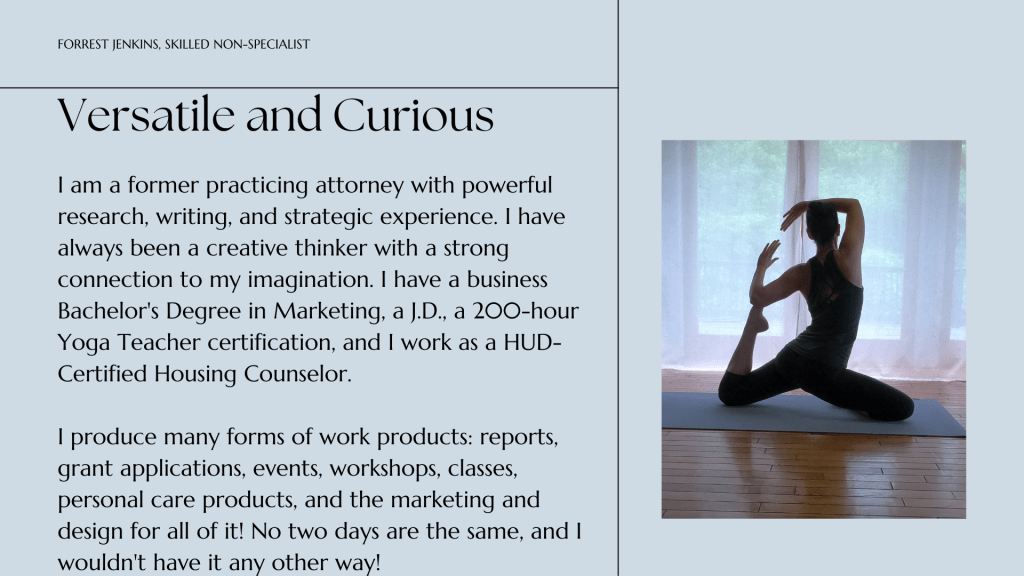
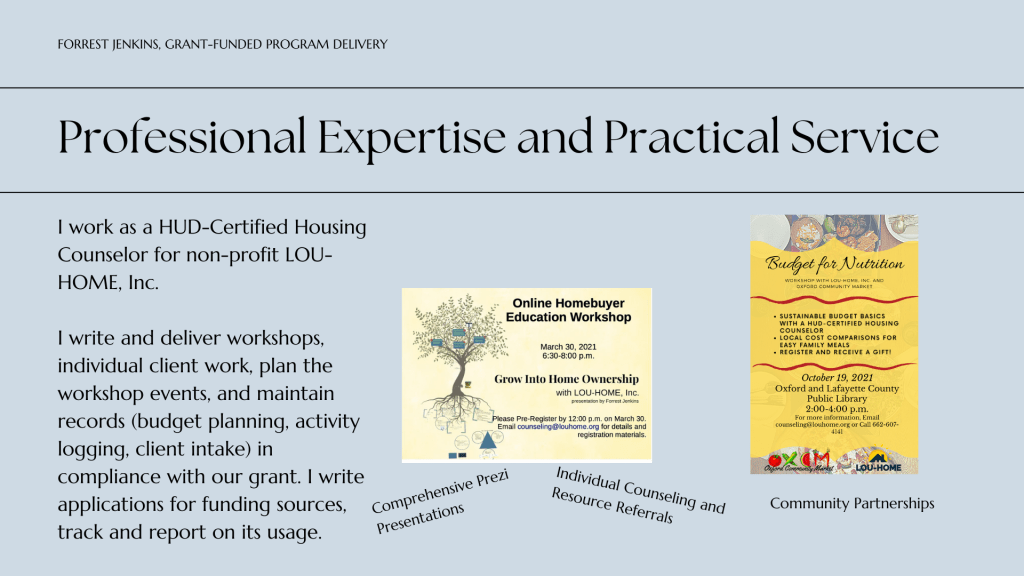

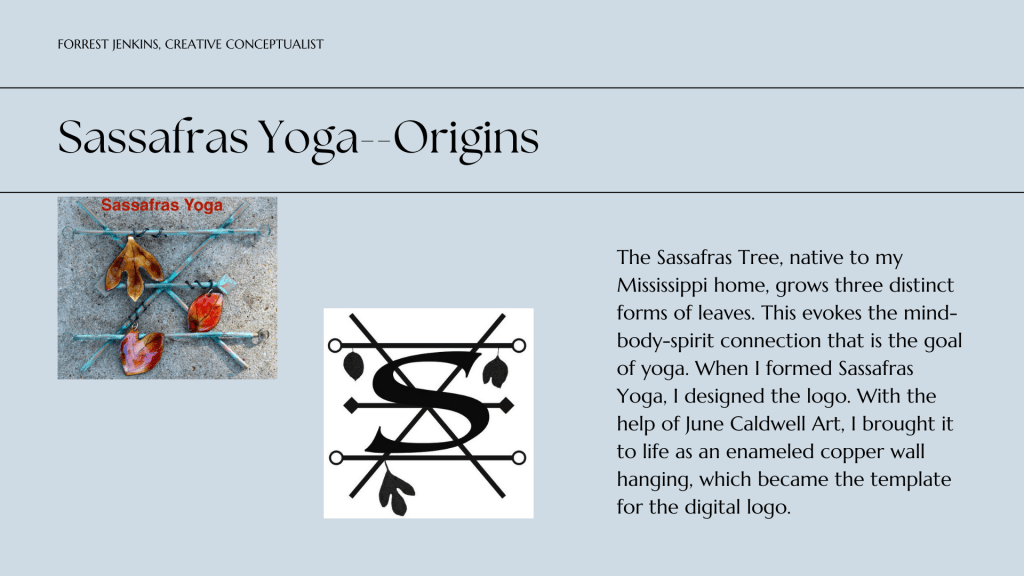


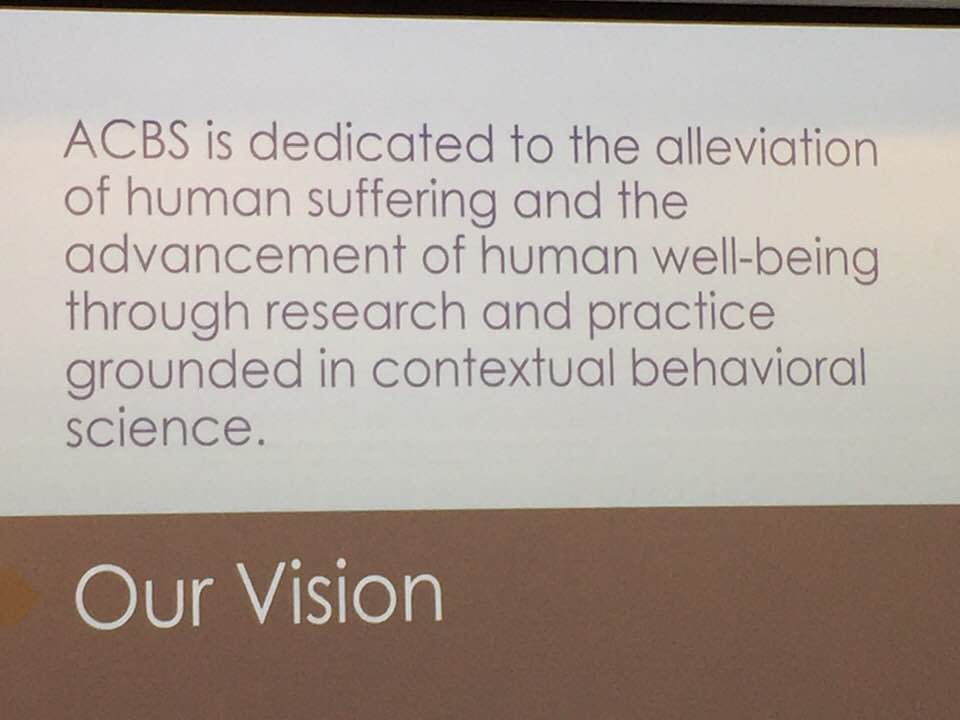
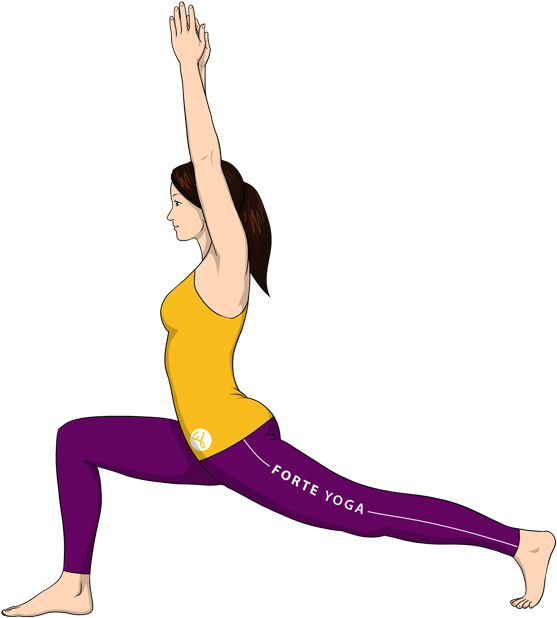

 The Sassafras Cottage